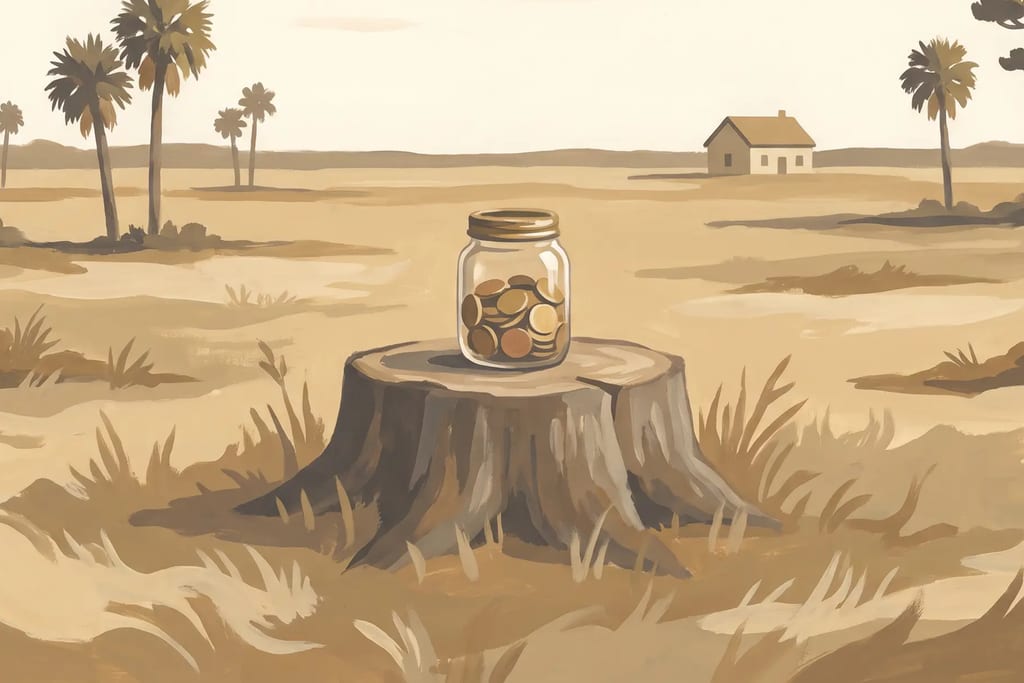

Some wounds don’t come from what happened in a home, but from what never happened. A missing voice. A missing presence. A missing standard. Even when someone grows up and builds a life that looks stable on the outside, the absence can still echo in quiet places. That is part of why fatherhood matters so much in Scripture. God never treats it as a minor role. He treats it as weighty, formative work that shapes souls.
Fatherhood is not a side responsibility
The Bible speaks to fathers with clarity: “Bring [your children] up in the discipline and instruction of the Lord” (). That calling is more than providing food, shelter, and opportunities. It includes spiritual direction, correction shaped by love, and an atmosphere where God is honored in everyday life.
This is especially urgent because children are constantly being discipled by something. Media, friends, algorithms, and cultural values all preach a message. If a father drifts into passivity, the home will not remain neutral. Another voice will fill the gap.
That doesn’t mean every father must lead in the same style or with the same personality. But it does mean spiritual leadership cannot be postponed forever, delegated completely, or treated as optional.
Noah shows the power of steady obedience
Noah’s strength wasn’t that he lived in an easier time. He lived in a corrupt world and chose to obey anyway. Genesis describes him with a simple summary that becomes profound when you think about the long years involved: “Noah did according to all that God had commanded him” ().
That kind of obedience is rarely glamorous. It’s daily faithfulness when nobody applauds. It’s choosing integrity when compromise would be easier. It’s doing what is right even when you feel outnumbered. And for fathers, that matters because children learn what “normal” looks like by watching what their dad does repeatedly.
A home doesn’t become godly through occasional moments of inspiration. It becomes godly through consistent patterns of obedience.
Abraham shows how worship is taught
Many families assume children will naturally absorb reverence, but Scripture shows worship is something children learn through instruction and example. God described Abraham as a man who would direct his household in the way of the Lord (). In other words, Abraham didn’t treat faith as a private hobby. He treated it as a family direction.
That same principle appears in the broader call of Scripture: God’s words are meant to be spoken in the home, woven into normal life, and taught with repetition and intention (). This does not require a seminary education. It requires presence. It requires consistency. It requires a father who is willing to talk about God in real life, not only on “church days.”
Children don’t only need to know that worship happens. They need to learn why it matters and what it means to honor God sincerely.
Job shows what it means to prioritize souls
Job is often remembered for suffering, but the opening chapter highlights him as a man who feared God and actively cared about his children’s spiritual condition. The text shows him praying and offering sacrifice with spiritual seriousness, not casual neglect ().
That is a needed picture in a culture where “success” can quietly replace “faithfulness.” It’s easy for a family to prioritize grades, sports, social standing, and future careers while treating prayer and Scripture as optional extras. But a father is called to value what lasts. A child’s soul matters more than a child’s résumé.
This doesn’t mean ignoring practical needs. It means refusing to become so busy providing a life that we fail to shepherd the heart.
A legacy is built through clarity and consistency
One of the most challenging truths about fatherhood is that it always leaves something behind. A father’s influence doesn’t vanish when children grow up. It often intensifies because children carry patterns into their own homes.
Scripture even gives an example of standards reaching beyond one generation. In Jeremiah 35, Jonadab’s descendants are commended for honoring what their father taught them, and their consistency becomes a rebuke to a people who wouldn’t listen to God (). Whatever you think of the specific practice in that chapter, the legacy point is unmistakable: fathers set trajectories.
That’s why it matters what a father normalizes. What does the home treat as non-negotiable? Worship and encouragement with the church? Truthful speech? Self-control? Hospitality? Repentance? A child will learn what matters most, not from what a father says once, but from what he protects consistently.
Faithful fathers model repentance, not perfection
A quiet fear keeps many men from leading: “I’m not good enough to lead spiritually.” But Scripture doesn’t call fathers to flawless performance. It calls for faithful direction.
One of the strongest gifts a father can give his children is a humble example of repentance. Children need to see what it looks like to admit wrong, to correct course, and to seek peace. That kind of humility teaches them that faith is real. It shows them that following God is not about image management; it is about transformation.
A father who says, “I was wrong, and I’m going to change,” is teaching something the world rarely teaches. He is teaching ownership, integrity, and the fear of God.
A simple way to start this week
If you’re a father who wants to close the gap, don’t start with grand gestures. Start with steady choices:
- Choose one small, consistent time to pray for your children by name.
- Read a short passage of Scripture and ask one simple question: “What should we do with this?”
- Make one clear boundary that protects your home’s spiritual health and keep it with calm consistency.
- Lead by example in what you want to grow in them.
Joshua’s household statement is still a worthy aim: “As for me and my house, we will serve the Lord” (). Every child must eventually choose faith personally, but fathers can create an environment where serving God is not theoretical. It is practiced. It is visible. It is normal.
And over time, that kind of leadership closes gaps that once felt permanent.