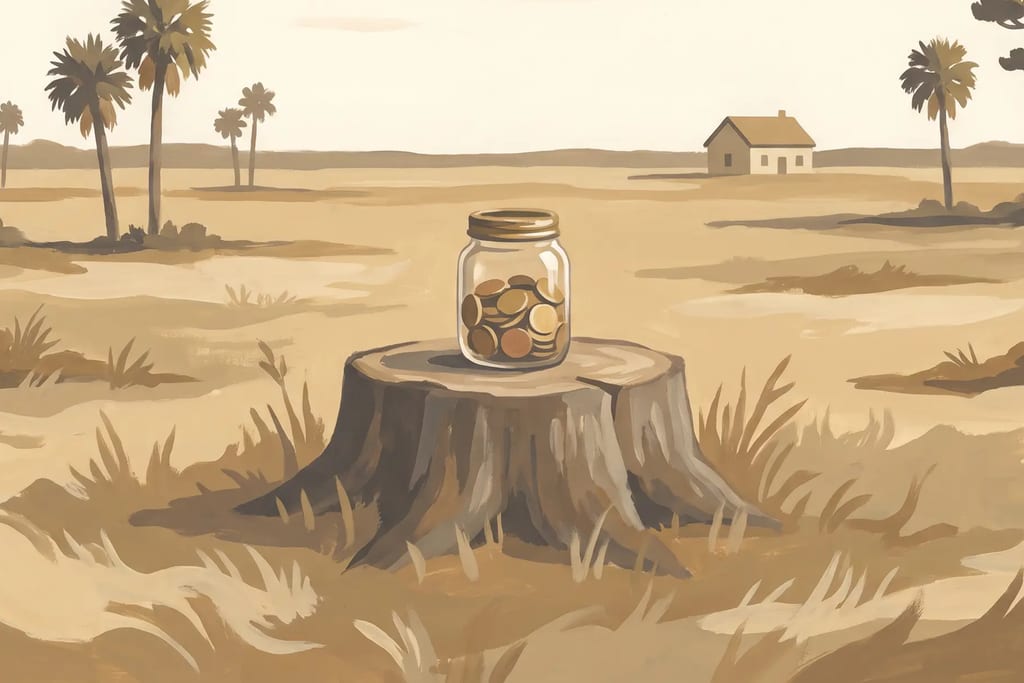

There is something quietly devastating about a man who walks to the edge of his property every morning and scans the horizon. He does not know if the face he is looking for will ever appear. But he goes anyway. The parable Jesus tells in Luke 15 is, at its core, a story about that man and about the God he represents.
Sick of Home
The younger son in Jesus’ parable does not run away in secret. He makes a demand. He goes to his father and essentially says: give me what I would inherit when you die. Now. The audacity of the request would have struck Jesus’ original audience far more sharply than it strikes us. It was not just rude; it was a kind of social death. Yet the father does something remarkable. He does not refuse. He divides his estate.
Within days, the younger son converts his inheritance to cash and heads for a far country. He is sick of home, craving distance from his father, convinced that freedom lies somewhere beyond the family land. He wants the blessings without the relationship.
What he finds instead is what many discover when they move far from God: the blessings run out. Famine arrives. The money evaporates. He ends up hired out to feed pigs, an image that would have been almost comically degrading to a Jewish listener. He is tending animals he cannot eat, so hungry he considers sharing their food. No one gives him anything.
The Turn
Three words mark the hinge of the whole story: “He came to himself” (). There is no angelic messenger. No thunderclap. Just a moment of clear-eyed recognition. He looks at his situation and thinks: my father’s hired servants eat better than this.
This is what honest self-assessment can do. Not self-pity, not bargaining, but an unsparing look at where the rebellion has led. He prepares a speech. He will ask to be taken back not as a son but as a hired worker. He knows he has forfeited the right to call himself a son. He is not manipulating his way home; he is genuinely broken and willing to start at the bottom.
That shift, from proud demand to humble return, is the shape of repentance. Jesus describes the same posture in when he invites those who are weary and heavy-burdened to come to him. The yoke image is instructive: no one picks up a yoke voluntarily unless they have admitted they cannot plow alone.
The Father Who Runs
What happens next is the emotional center of the parable. The son is “still a great way off” when his father sees him (). The father has been watching. He runs.
In the ancient Near East, a man of his social standing did not run. Running required gathering up your robe, exposing your legs. It was undignified. But the father runs anyway. He reaches his son before the rehearsed speech is even finished, falls on his neck, and smothers him with kisses. The Greek word used there carries the sense of kissing again and again, profusely. This is not a polite handshake reunion. This is a man who has been waiting a very long time.
The father interrupts the confession. There is no probationary period, no “we will see how you do.” He calls for the robe, the ring, the sandals, the fatted calf. “He was lost and is found,” the father says. “He was dead and is alive again.” The celebration is immediate ().
What the Older Brother Reveals
The parable does not end with the party. It ends with an older brother standing outside in the dark, arms crossed, angry. He has been faithful. He has worked hard. And he cannot bring himself to go in and celebrate.
His complaint is not entirely without reason. He stayed. He kept his end of the arrangement. And now the brother who demanded his share early and wasted it on reckless living gets a fatted calf and a party?
The father’s response is gentle: “Son, you are always with me, and all that I have is yours” (). The faithful son has not been robbed. His brother’s return does not diminish what he holds. But the father adds something important: it was right that they should celebrate. Rejoicing over a repentant sinner is not optional. It is right.
Jesus leaves the older brother’s response unresolved on purpose. The original audience, mostly scribes and Pharisees who resented his welcome of sinners, had to decide what they would do with that open ending. So do we. Bitterness toward people who are trying to be better is a quiet poison, and this parable exposes it without apology.
The Road Still Open
The parable’s quiet power is not only in the son’s repentance but in the father’s uninterrupted watch. He is at the edge of the property every day. He is looking. He is ready to run the moment a silhouette appears on the horizon.
God is not waiting to punish the wandering soul who returns. He is not tallying up the wasted years. makes this explicit: God is “not willing that any should perish, but that all should come to repentance.” The door of return is not a narrow exception; it is the whole point of the parable.
If you have been living at a distance from God, spending what you were given on things that do not satisfy, the road back is still open. The younger son’s return followed a simple pattern: honest recognition, genuine repentance, and a turn toward home. Those who responded to the gospel in the first century did the same, confessing faith, repenting of sin, and being immersed in water for the forgiveness of sins (; ). The pattern has not changed. And neither has the father’s posture. He is still at the edge of the property. He is still watching the road. He is still ready to run.