Some disciples leave their mark through years of public work. Others step forward in one decisive moment when everything is on the line. Joseph of Arimathea belongs to the second group. His name is easy to miss in the gospel story, yet his actions shaped the way the resurrection story could be told. Before the tomb could be found empty, Jesus had to be laid in it, and Joseph made sure that happened with courage and honor.
Courage that steps out of the shadows
Mark tells us Joseph “gathered up courage” and went to Pilate to ask for the body of Jesus (). That phrase matters because it shows this was not an easy request. Jesus had been executed as a criminal. To ask for His body was to associate yourself with Him at the worst possible time.
Joseph also had another risk. Luke says Joseph was a member of the council and that he had not consented to their plan and action (). He was surrounded by powerful voices that wanted Jesus gone. John adds that Joseph had been a secret disciple because of fear (). That fear makes sense. It was costly to be identified with Jesus.
But at this moment Joseph decided he would no longer hide. He stepped into the light. He took the risk. He did the right thing, even with consequences hanging over him.
A question worth asking is simple: where am I still living like a secret disciple? If people around me never see my loyalty to Christ, is it because I never have opportunities, or because I avoid them? Joseph teaches us that courage is not the absence of fear. Courage is obedience in the presence of fear.
Sacrifice that is personal and costly
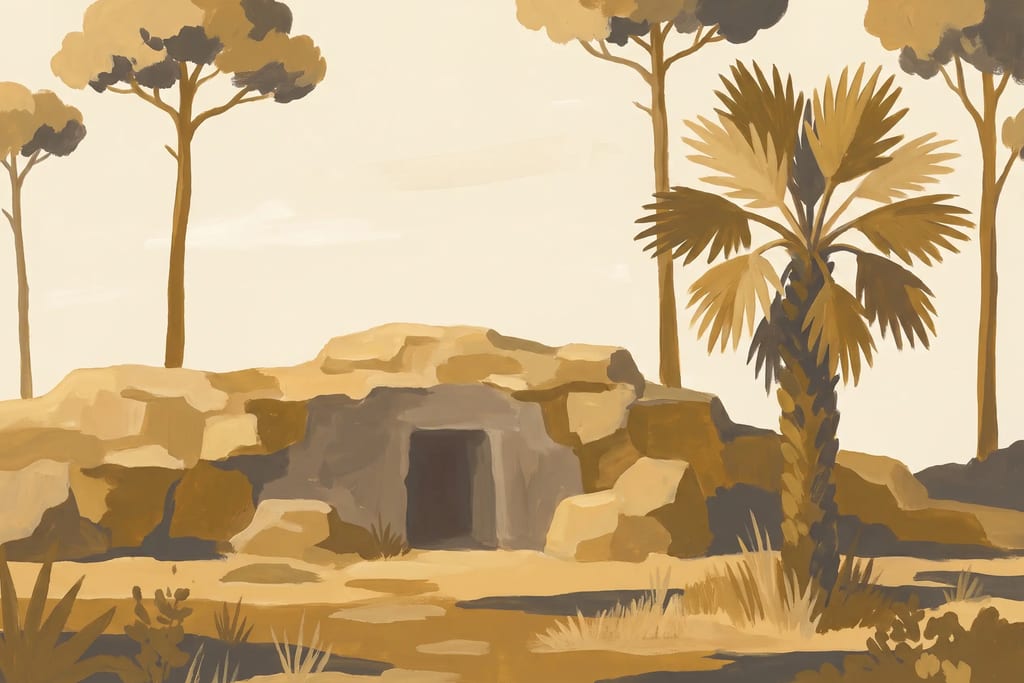
Joseph did more than request the body. He bought linen, took Jesus down, wrapped Him, and laid Him in a tomb cut from rock (). Luke adds that no one had ever been laid in that tomb (). That detail strongly suggests this was Joseph’s own burial place. Tombs like that were not common. They were expensive. They were planned. They were personal.
In other words, Joseph honored Jesus with something that cost him. He gave his own place of rest for the Lord’s burial.
This puts Joseph in the same spiritual neighborhood as the woman who anointed Jesus with costly perfume, an act Jesus connected with His burial (). Both teach a similar lesson: when someone truly values Jesus, it shows up in sacrifices that are real, not merely symbolic.
It is easy to offer God what does not cost us much. It is harder to offer what we would naturally keep for ourselves: money, time, comfort, and convenience. Joseph’s example asks whether our discipleship includes the willingness to give up something meaningful for the sake of honoring Christ.
An honest heart that refuses to excuse injustice
Luke says Joseph was “good and righteous” and that he did not consent to what the council did (). That tells us Joseph was not swept along by group pressure. He had the kind of heart that could still recognize wrong as wrong, even when the majority celebrated it.
An honest heart matters because it keeps a disciple responsive. Proud hearts defend themselves. Hard hearts twist the evidence. Honest hearts admit what is true, then adjust their lives accordingly.
That is a daily need. When Scripture exposes a sin, do I justify it or repent? When a brother or sister corrects me gently, do I fight back or listen? When the cross confronts my selfishness, do I shrug it off or let it move me again?
Joseph did not rationalize what was happening. He responded with action.
Seizing the moment God places in front of you
Joseph’s situation also included a providential opportunity. He had access to Pilate. He had resources. He was in Jerusalem at the right time. He had a tomb nearby. Not everyone had those advantages, but Joseph did, and he used them.
This is one of the most practical lessons: opportunities are a form of stewardship. God opens doors in ordinary life. A conversation with a coworker who is hurting. A neighbor who needs help. A new Christian who needs encouragement. A family with burdens. A shepherd who asks you to serve. These moments are not always dramatic, but they are real.
Joseph could have stayed quiet and safe. Instead, he recognized the moment and acted.
The burial that prepared the way for hope
Joseph’s actions also served something bigger than he could fully see in the moment. Isaiah had spoken of the suffering servant being with a rich man in His death (). The burial was not random. It was part of God’s plan, and Joseph was the instrument God used to accomplish it.
And then the most beautiful part of the story arrives. Joseph’s tomb would not remain occupied. It would become the place where the reality of resurrection was confirmed. The empty tomb is powerful because the burial was real, witnessed, and specific.
Joseph teaches us what faithful discipleship can look like when it costs something. Courage that steps forward. Sacrifice that gives up what is valuable. Honesty that will not excuse sin. And readiness to seize the moment to honor Jesus.
Those lessons do not belong to Easter season alone. They belong to every Sunday, every week, and every decision where loyalty to Christ is tested.